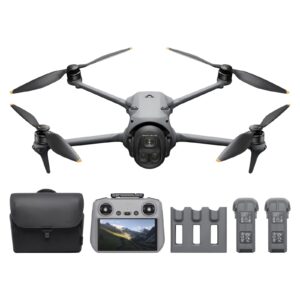
DJI DJI Dock 3
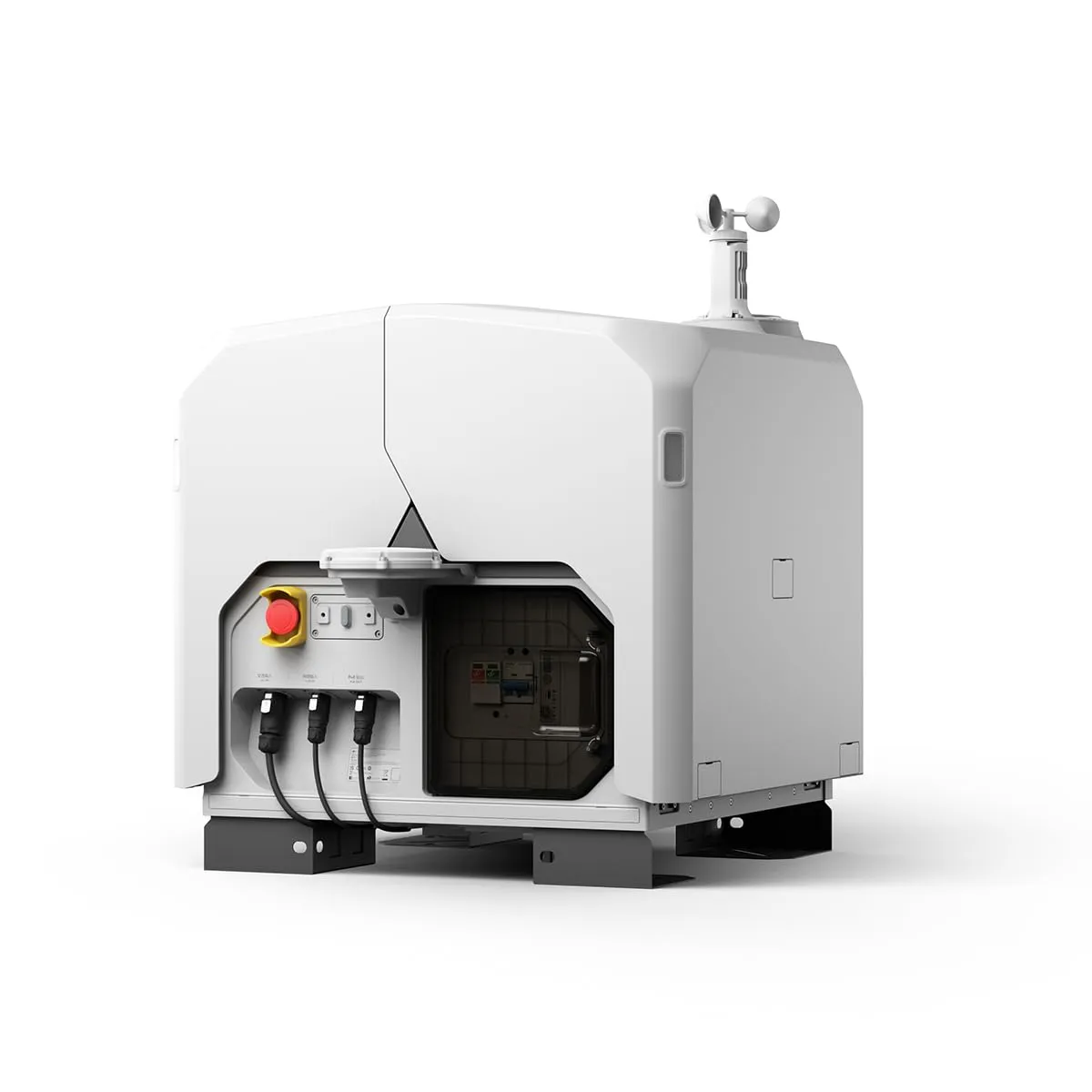
Imagine a docking station that feels less like a piece of kit and more like an operating system for the skies: the DJI Dock 3 reframes how teams think about drone work, turning complex missions into a seamless, resilient routine. It’s built to be the quiet backbone of operations—always ready, instantly deployable, and designed to keep drones in the air where they deliver value. Whether you’re orchestrating emergency response, surveying vast infrastructure, or running routine inspections, this dock brings the assurance of reliable takeoffs, pinpoint landings, and robust positioning into a single package that adapts to real-world constraints.
What makes it compelling is how it blends reliability with mobility. The dock’s anti-vibration design and rugged construction mean you can trust it in challenging environments, while its compatibility with advanced platforms like Matrice 4D and 4TD ensures it slots into professional workflows without friction. Remote calibration and integration with mission-control tools make setup and ongoing management feel modern and intentional—less firefight, more conducted performance. The result is a ground system that doesn’t just support drones; it amplifies them, turning individual flights into dependable, repeatable outcomes.
At its heart, this product is about freeing teams from logistics and letting them focus on insight. By combining precise landing techniques, resilient GNSS and RTK capabilities, and smart site flexibility, the dock makes high-frequency, high-quality data capture achievable at scale. For any organization that needs drone operations to be predictable, safe, and efficient, the DJI Dock 3 reads like an upgrade to their operational mindset: a dock that quietly ensures every mission starts and ends with confidence.
- 10s Take-off: Updated take-off logic for quick deployment
- GNSS Module: Always on with standby for emergency missions
- Self Check: Enhanced self-check efficiency without waiting for propeller check
- Anti-vibration Design: Ensures dock reliability and vehicle deployment readiness
- Remote RTK Calibration: Supports remote calibration of Dock RTK position via FlightHub 2
- External RTK Module: 2dB signal gain for faster, more reliable RTK convergence
- D-RTK 3 Signal Enhancement: Improves signal quality with installation at elevated locations
- Precise Landing Techniques: Combines SLAM and mark recognition for accurate landing
- Vehicle-Mounted Gimbal Mount: Automatically holds aircraft and gimbal during transport
- Extended Compatibility: Integrates seamlessly with DJI Matrice 4D and 4TD drones
- Robust Ground System: Provides stable and secure base for drone operations
- Durable Build: High-quality construction, weather-resistant design for harsh conditions
- Compact Design: Dimensions of 25.1 x 29.3 x 30.3′ (Cover Closed)
- Easy Installation: Includes grounding wire, mounting screws, and detailed manual
Pros
- Accelerates autonomous drone operations by minimizing idle time between missions, increasing sortie throughput for commercial and emergency use—ideal for continuous aerial service delivery with DJI Dock 3.
- Persistent positioning readiness enhances mission resilience, giving teams confidence that aircraft can be deployed quickly under unpredictable conditions.
- Smarter preflight routines cut on-site preparation, reducing operator intervention and enabling scalable fleet workflows across many stations.
- Advanced vibration mitigation and a purpose-built base reduce mechanical wear, improving long-term uptime and lowering lifecycle maintenance costs.
- Remote RTK management and cloud-integrated calibration streamline precision positioning across distributed sites, supporting centralized fleet orchestration and faster convergence to centimeter-level accuracy.
- Sensor fusion for return and landing increases repeatability of automated recovery, protecting payloads and shortening turnaround times for time-sensitive missions.
- Built-in transport securing mechanisms and broad compatibility with newer Matrice platforms make the dock a practical node for multi-model fleets and mobile deployment strategies.
- Rugged, compact engineering paired with a supplied installation kit simplifies site rollout, helping organizations deploy drone docking stations faster and with fewer surprises.
Cons
- Advanced features introduce operational complexity; initial commissioning and periodic calibration often need skilled technicians despite remote tools—raising onboarding friction for smaller teams.
- Reliance on networked management and remote calibration can be a vulnerability in connectivity-poor environments, where fallback procedures must be planned.
- Optimal RTK performance may require careful antenna placement or modest site modification, adding to installation planning and potential civil works.
- Premium components and enhanced modules raise total acquisition and repair costs compared with basic docking solutions, impacting return-on-investment calculations.
- Compact footprint helps placement but still demands a dedicated, secure site; urban and constrained locations may limit ideal siting options.
- Weatherproofing improves durability but does not eliminate the need for seasonal inspection and maintenance to preserve reliability.
- Being tightly integrated into the DJI ecosystem can restrict cross-platform interoperability, tying customers to vendor-specific workflows and tools.
- Operational dependence on firmware and software updates necessitates disciplined maintenance windows; unscheduled updates could interrupt continuous missions if not managed.
- High automation can create complacency risk—human oversight remains important to catch edge-case failures and maintain safe, compliant operations.